
3 min read
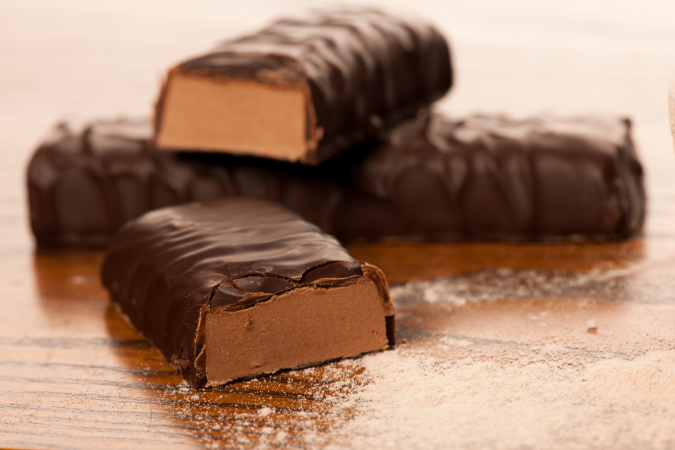
Why do protein bars get hard? It's the single most common texture complaint in high-protein snack development—and one of the hardest to solve. A bar can pass every sensory check on Day 1, then turn noticeably firm six to eight weeks later, well inside its stated shelf life. By the time the problem surfaces, the formulation, packaging, and shelf-life claims are often already locked, forcing costly reformulation.
For R&D and procurement teams building bars at scale, understanding why bars harden is the first step to preventing it. The good news: the mechanisms are well understood, and the right ingredient system can hold texture from production line to purchase.
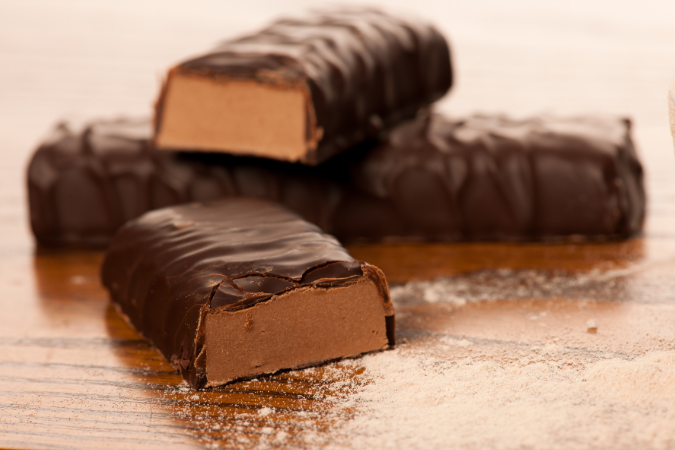
What actually causes protein bar hardening
Hardening is rarely a single defect. It's a storage-stability problem driven by several changes happening at once inside the bar matrix:
- Moisture migration. Water doesn't just evaporate—it redistributes. In most bars, moisture moves from the carbohydrate fraction into the protein fraction over time. As proteins take on water, they firm up. This internal transfer is why bars can harden even in sealed, moisture-tight packaging.
- Protein aggregation. Proteins form stronger bonds with one another during storage (including thiol–disulfide interchange in dairy proteins), building a denser, more rigid network.
- Sugar and carbohydrate crystallization. Amorphous sugars can slowly form crystalline structures, adding to the firmer mouthfeel.
- Oxidation and Maillard reactions. Lipid and protein oxidation, along with browning reactions between sugars and amino acids, further stiffen the matrix and dull flavor.
Because these reactions are slow, the bar evaluated at production is not the bar the consumer eats weeks later—which is exactly why texture failures tend to appear after launch.
Why standard humectants aren't enough
Formulators typically reach for humectants—glycerol, sorbitol, maltodextrin, high-fructose syrups—to hold water and slow hardening. These help limit moisture loss to the environment, but they do little to stop moisture transferring internally from carbohydrates to proteins. That internal migration is the real driver of firming, and it calls for functional hydrocolloids that manage water within the matrix and protect the ingredients around it.
The ingredient toolkit for soft, stable bars
A targeted hydrocolloid system addresses hardening at its source—binding water, protecting starches, and controlling migration.
1. Protect the starch with amylase-free xanthan — [GPI PureXan 80AN] Standard gums can carry residual amylase, an enzyme that quietly degrades the starches giving your bar its structure. GPI PureXan 80AN is an amylase-free xanthan gum, so it thickens and stabilizes without breaking down starch over shelf life. It's cold-soluble and functional across a wide pH range, with a typical use level of just 0.1–0.3%.
2. Bind water with high-viscosity cellulose gum — [GPI PureCel 1123] GPI PureCel 1123 is a high-viscosity carboxymethyl cellulose (cellulose gum) that binds water and controls viscosity throughout the formula. By holding moisture in place, it helps keep bars soft and pliable rather than dry and firm.
3. Retain moisture and remove eggs with one system — [GPI 9130] GPI 9130 mimics whole-egg functionality (allowing you to reduce or fully remove eggs) while helping retain moisture throughout the product's shelf life and adding freeze-thaw stability—valuable for refrigerated and frozen bars where cracking often accompanies firming.
4. Stop migration and boil-out in filled or layered bars — [GPI 9801] For bars with fruit fillings or distinct layers, GPI 9801 forms a heat-stable, thermally irreversible gel that controls syneresis and moisture migration between components and prevents boil-out during baking—keeping bases crisp and fillings where they belong. It works at 0.2–0.5% of the filling.
Where to start
Hardening is multi-causal, so the most durable fixes usually combine water management (cellulose gum), starch protection (amylase-free xanthan), and moisture retention (egg-replacement/structure systems)—dialed in against your specific protein source, water activity, and packaging. Plant-based protein bars in particular benefit from testing early, since much hardening research has historically focused on dairy systems.
Frequently asked questions
Why do protein bars get hard over time? Mainly because water migrates internally from the carbohydrate fraction to the protein fraction, combined with protein aggregation, sugar crystallization, and oxidation. Together these build a denser, firmer matrix during storage—even in sealed packaging.
How do you keep protein bars soft? Manage water within the matrix, not just at the surface. Water-binding cellulose gums, amylase-free xanthan (to protect starch), and moisture-retaining structure systems slow the internal migration and reactions that cause firming.
What causes moisture migration in protein bars? Differences in water activity between ingredients drive water toward the protein fraction. Functional hydrocolloids help hold moisture in place and reduce that transfer.
Does protein type affect hardening? Yes. Dairy proteins (whey, milk protein isolate) and plant proteins age differently, so texture systems should be validated for your specific protein base.
Build bars that taste like Day 1 at end of shelf life
GPI supplies the hydrocolloid systems that keep bars soft, stable, and on-spec at commercial scale—backed by HACCP, GMP, and BRCGS certification, US inventory stocked in Illinois for short domestic lead times, and reliable, spec-matched sourcing.
Request spec sheets and samples for GPI PureXan 80AN, PureCel 1123, GPI 9130, or GPI 9801 to start your next texture trial.
