

6 min read
Mold Inhibition Without Calcium Propionate: Organic Compatible Alternatives
Mold Inhibition Without Calcium Propionate: Organic Compatible Alternatives Mold is the spoilage organism your customer sees.
4 min read
In a vacuum-packed deli meat, the clock is set by bacteria. Not by mold, not by oxidation — by the steady climb of total plate count toward the threshold where a product is no longer sellable, and by the quieter risk of Listeria monocytogenes growing at refrigeration temperature in a sealed package.
For decades, the answer was sodium lactate or potassium lactate. They work. They also read as chemical on a label that consumers increasingly scrutinize, and at effective doses they carry a real sensory cost.
Clean-label bacteria inhibition is achievable, and the trial data is more favorable than most formulators expect.
Listeria monocytogenes is the organism that makes refrigerated ready-to-eat meat a regulated category rather than a simple one. It grows across a temperature range of roughly −0.4°C to 45°C, tolerates a pH range of 4.4 to 9.4, and survives at water activity of 0.92 and above.
In practical terms: your cold chain does not stop it. Proper cooking kills it, but post-lethality contamination during slicing, handling, and packaging reintroduces it — into exactly the vacuum-packed, refrigerated environment where it can slowly grow.
Health Canada's guidance for Category 1 ready-to-eat foods treats an aerobic colony count at or above 10⁵ CFU/gram as unsatisfactory. That's the number a shelf-life study is really measuring against.
Spoilage bacteria and lactic acid bacteria set the commercial limit; Listeria sets the safety limit. A good antimicrobial addresses both.
A natural antimicrobial built on dried vinegar solids works through the organic acid fraction — undissociated acetic acid crosses the microbial cell membrane, dissociates in the higher-pH cytoplasm, and disrupts internal pH homeostasis and metabolic function.
The critical engineering choice is buffering the ingredient to a near-neutral pH. This preserves antimicrobial activity while keeping the finished product's pH essentially unchanged, so you get bacteria inhibition without souring, moisture loss, or oxidative color shift.
Two formats deliver the same chemistry: a dry powder for brines, sauces, coatings, and ground or formed products, and a liquid for injection, tumbling, spraying, and dipping.
A vacuum-packed sliced ham study compared a dried vinegar antimicrobial against 2.5% sodium lactate and an untreated control, measured against the 5 log CFU/g total plate count spoilage threshold.
| Treatment | Time below spoilage threshold |
|---|---|
| Untreated control | 3 weeks |
| 2.5% sodium lactate | 4 weeks |
| 0.3% vinegar antimicrobial | ~9 weeks |
| 0.5% vinegar antimicrobial | ~9 weeks |
| 0.7% vinegar antimicrobial | Did not reach threshold in 76 days |
At 0.7%, treated ham never crossed the spoilage line across the entire study. At just 0.3% — less than an eighth of the sodium lactate dose by weight — it delivered roughly five additional weeks of shelf life over the lactate benchmark.
Lactic acid bacteria counts stayed low across all treatments, with no increase detected over the 76-day period.
Sensory panels favored the low-dose treatment. Ham with 0.3% vinegar antimicrobial was most preferred; sodium lactate ham was rated worst, for high saltiness and strong flavor.
For refrigerated ready-to-eat items in modified-atmosphere packaging, a 65-day study measured a dry-powder vinegar and cultured dextrose blend against an untreated control:
This is the profile a grab-and-go refrigerated meat item needs: bacteria inhibition, anaerobic pathogen control, and sensory stability, all from a single clean-label dry powder.
If you run certified organic SKUs, the ingredient list narrows quickly. GPI's liquid vinegar antimicrobial is available in a USDA Organic–certified version, and the platform is non-GMO, kosher, and halal.
That matters operationally as much as it does on the label. A single antimicrobial strategy spanning both conventional and organic lines means one supplier qualification, one set of QA documentation, and one specification to maintain.
The ingredient declaration is short — vinegar, or vinegar and cultured dextrose. At low usage levels these can often be declared as a processing aid rather than an ingredient, though the rules vary by jurisdiction. Confirm with your regulatory team before finalizing label copy.
The trials above span 0.3% to 1.5%, and that range is not arbitrary. Higher doses buy more shelf life; they also increase saltiness and sourness perception, and eventually your sensory panel objects.
The optimization is real, and it's product-specific. Fat content, water activity, packaging atmosphere, and post-lethality handling all shift the answer. Published data establishes what's possible; a bench trial at two or three doses establishes what's right for your matrix.
What is bacteria inhibition in meat processing? Bacteria inhibition means suppressing the growth of spoilage bacteria, lactic acid bacteria, and pathogens like Listeria monocytogenes in a finished product. In refrigerated meat, it's the primary driver of shelf life and food safety.
Can a natural antimicrobial control Listeria? Yes. In a 25-week cooked ground turkey study, a dried vinegar antimicrobial at 1.3% held Listeria monocytogenes to under a 1-log increase, while the untreated control exceeded 8 log CFU/g by week 6.
Is a natural antimicrobial as effective as sodium lactate? In sliced cooked ham, a 0.3% dried vinegar antimicrobial delivered roughly five more weeks of shelf life than 2.5% sodium lactate — and scored better in sensory evaluation.
Will bacteria inhibition ingredients change my product's taste? Buffered, near-neutral pH systems showed no vinegar bite in sensory panels. At higher doses, saltiness and sourness perception can increase, so dose optimization matters.
Do these ingredients work in modified-atmosphere packaging? Yes. A 65-day MAP study showed total coliform held at 0.85 log CFU/g in treated samples versus 7.33 in the control, with Clostridium indicators negative throughout.
Bacteria inhibition is matrix-specific. Tell our technical team about your product, your process, and your target shelf life — we'll recommend an ingredient, a format, and a starting dose.
Contact us → or explore the full antimicrobial portfolio.
6 min read
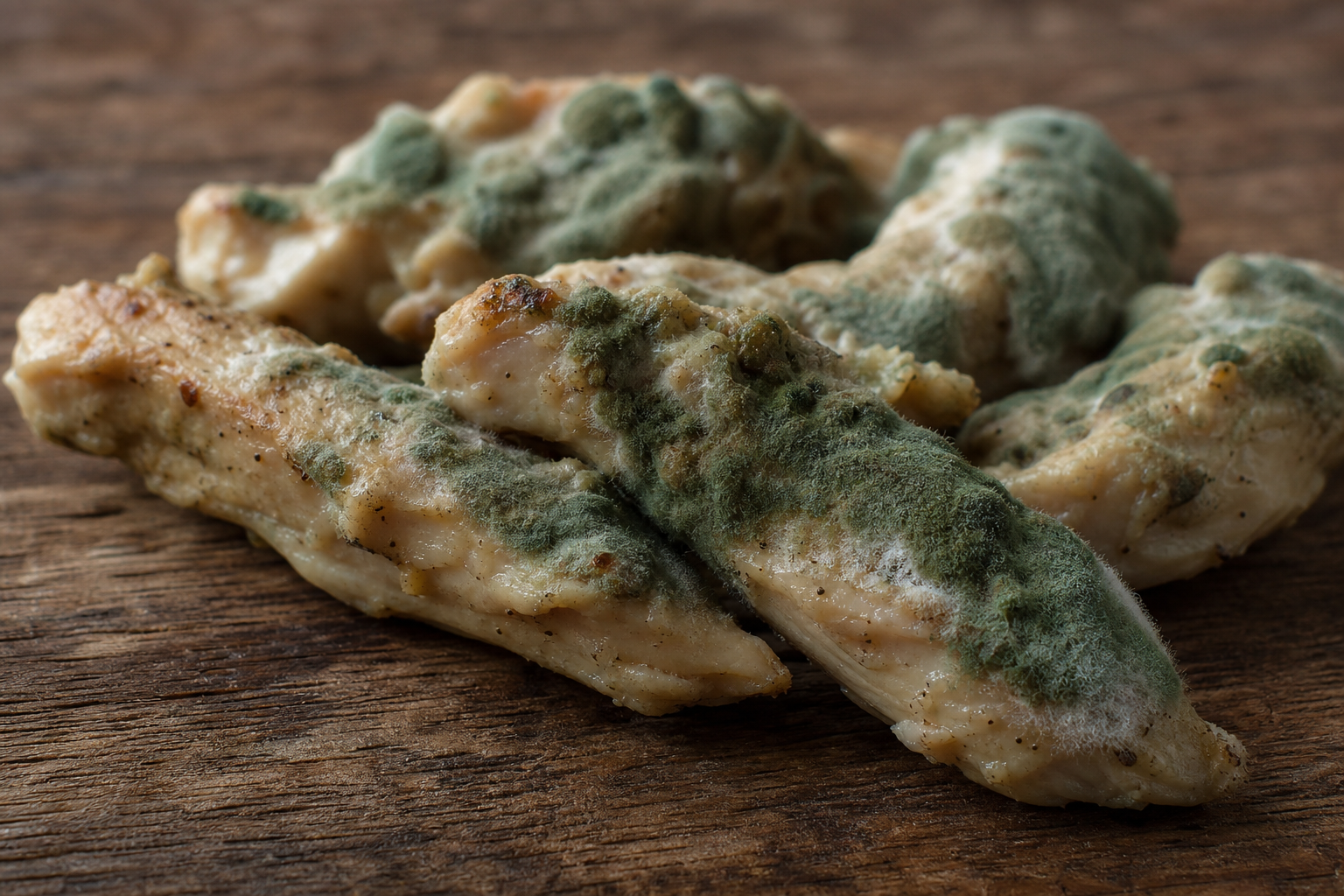
Mold Inhibition Without Calcium Propionate: Organic Compatible Alternatives Mold is the spoilage organism your customer sees.
6 min read
Natural Antimicrobials for Shelf-Life Extension: A Guide for Meat Processors
2 min read
Interest in acacia gum is growing quickly across beverage,nutrition, bakery, and confectionery product development — driven by demand forclean-label...