4 min read
Acacia Gum (Gum Arabica) Buyer's Guide
Acacia Gum (Gum Arabica): Grades, Uses and Reliable US Supply Acacia gum is in thousands of beverages, sauces and dressings, but for many buyers it's...

Not sure of what solution you need? Let us guide you through our portfolio specifically curated for your application.
Guide. Perform. Inspire. We are GPI.
Explore the full potential of our products and find functional solutions for your formulation’s unique needs.
Guide. Perform. Inspire. We are GPI.
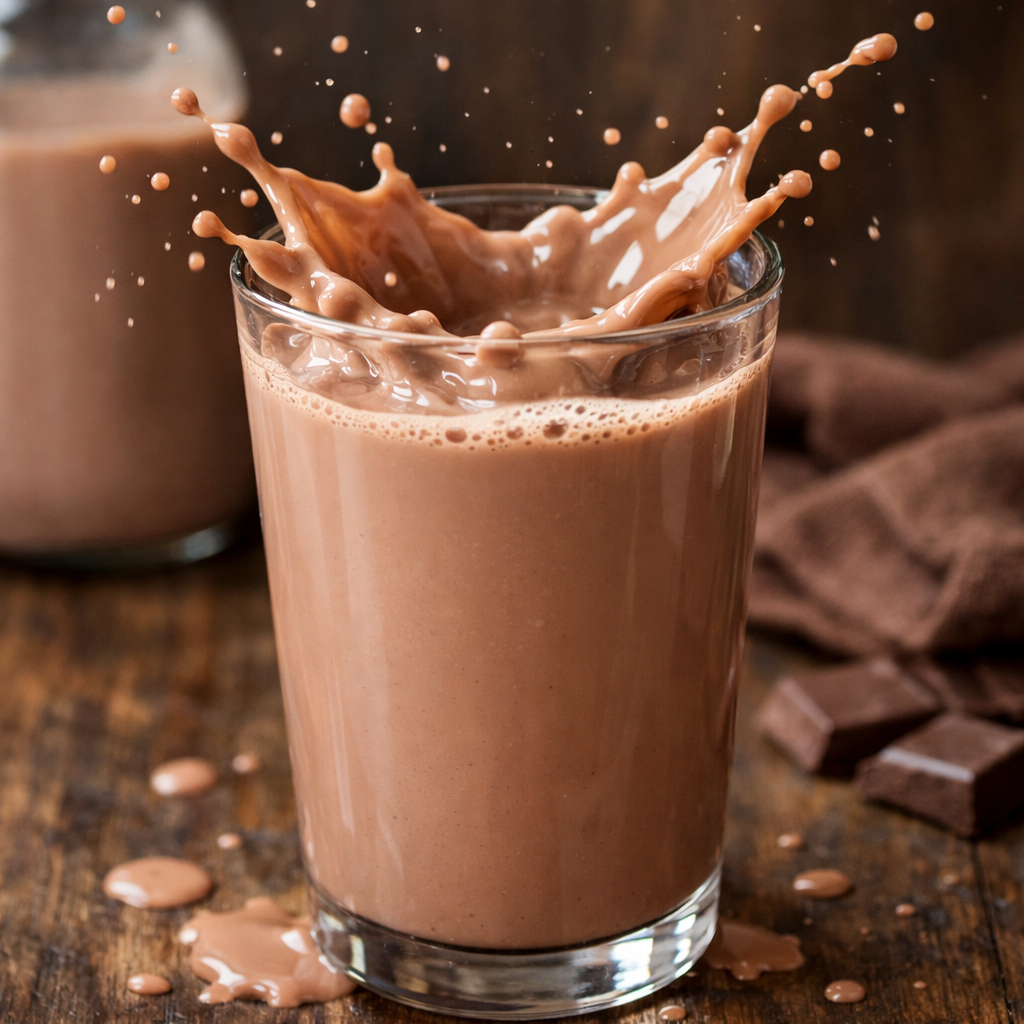
How do you keep cocoa solids from settling in a beverage? Use a small amount of xanthan gum to build an invisible suspending network, and add acacia gum to emulsify cocoa fat and round out the mouthfeel. Together they keep a chocolate drink uniform from the first pour to the last, without the heavy, slick texture that comes from simply thickening the liquid.
Sediment at the bottom of the bottle is one of the most common complaints in ready-to-drink (RTD) cocoa, protein shakes and plant-based chocolate milks. "Shake well" on the label is a workaround, not a fix: consumers read sediment as a quality problem, and retailers notice returns. This guide walks R&D teams through why cocoa settles, how xanthan and acacia gum solve it, and how each choice changes the final texture.
Cocoa particles are denser than water, so gravity pulls them down. How fast they sink depends on three things:
That last point is why simply adding body does not work. A thicker drink still develops sediment over a 6- to 12-month shelf life. You need a liquid that holds particles still at rest, then flows freely when poured or sipped.
Xanthan gum is unusual among hydrocolloids. At very low use levels it forms a weak, tangled network in water that has a yield stress: a minimum force needed before the liquid starts to flow. A cocoa particle sitting in that network is too light to push through it, so it stays put.
When you shake, pour or drink, the network breaks down and the beverage thins out (it is shear-thinning). When it comes to rest, the network rebuilds. That is exactly the behavior a suspended beverage needs: stable on the shelf, easy to drink.
Xanthan also holds up to the conditions beverages go through. It stays stable across a wide pH range, through pasteurization and UHT, and in the presence of salts and sugars.
Choosing a grade:
Both grades are amylase-free and manufactured in the USA. See our guide to fine vs. coarse mesh xanthan gum for more on grade selection.
Acacia gum (gum arabica) does not suspend particles on its own. It works at low viscosity, so it adds very little thickness. What it brings to a cocoa beverage is different, and it complements xanthan well:
For beverages, GPI PureAcacia 120 (100% Acacia senegal) is our strongest beverage emulsifier, and PureAcacia H560 (Acacia seyal, Non-GMO Project Verified) is a versatile, light-colored option. Our acacia gum buyer's guide compares the grades.
These are typical starting points for trials. The right level depends on your cocoa content, protein base, sweetener and process, so bracket the range rather than testing a single point.
| Ingredient | Starting range (% of finished beverage) | Role |
|---|---|---|
| Cocoa powder | 1.0–3.0% | Flavor and color |
| GPI PureXan 200AN or 80AN | 0.05–0.15% | Suspends cocoa particles |
| GPI PureAcacia 120 or H560 | 0.2–1.0% | Emulsifies cocoa fat, smooths mouthfeel |
Suspension and texture are linked. The goal is the lowest xanthan level that keeps the cocoa stable, with acacia tuning the mouthfeel.
| Formulation | Suspension | Texture in the mouth |
|---|---|---|
| Xanthan 0.03–0.05% | Partial; sediment may appear over weeks | Thin and milk-like, very clean |
| Xanthan 0.08–0.12% | Stable for most RTD cocoa drinks | Light body, pours easily; the usual target |
| Xanthan 0.15–0.20%+ | Very stable, even for heavy particles | Noticeably thick; can feel slick or coating |
| Any of the above plus acacia 0.2–1.0% | Unchanged; prevents the fat ring | Rounder, creamier body; softens slickness |
A practical rule: if a drink tastes slick or slimy, lower the xanthan and add acacia rather than raising thickness further. If cocoa still settles, look at particle size and homogenization before adding more gum.
A stabilizer with a yield stress, such as xanthan gum, holds cocoa particles in place at rest while still letting the drink pour. Smaller particle size from homogenization also slows settling.
Most RTD cocoa beverages are stable at 0.08–0.12% xanthan gum. Start at 0.05% and increase in small steps until sediment stops forming.
Only at higher use levels. Below about 0.12% it adds light body. Adding acacia gum softens any slick feel while keeping viscosity low.
Yes. Xanthan gum and acacia gum together offer a carrageenan-free way to suspend cocoa and stabilize cocoa fat, which suits clean-label and plant-based products.
Yes. The same approach suspends matcha, coffee solids, fruit pulp, protein particles and added minerals. Heavier particles may need the upper end of the xanthan range.
GPI manufactures PureXan xanthan gum and PureAcacia acacia gum in the USA, with short domestic lead times, consistent lot-to-lot performance and tariff-free pricing. Our technical team can help you set starting levels for your cocoa content and process.
Request PureXan and PureAcacia samples and spec sheets
Or email GPI@gpiglobal.com with your application and target shelf life.
4 min read
Acacia Gum (Gum Arabica): Grades, Uses and Reliable US Supply Acacia gum is in thousands of beverages, sauces and dressings, but for many buyers it's...
5 min read
Acacia Gum and the Prebiotic Soda Boom: A Formulator's Guide to Fiber Fortification For beverage R&D teams and food processors, the fastest-moving...

5 min read
Acacia gum — also called gum arabic — is one of the most versatile hydrocolloids in a formulator's toolkit. It emulsifies flavor oils in beverages,...