

5 min read
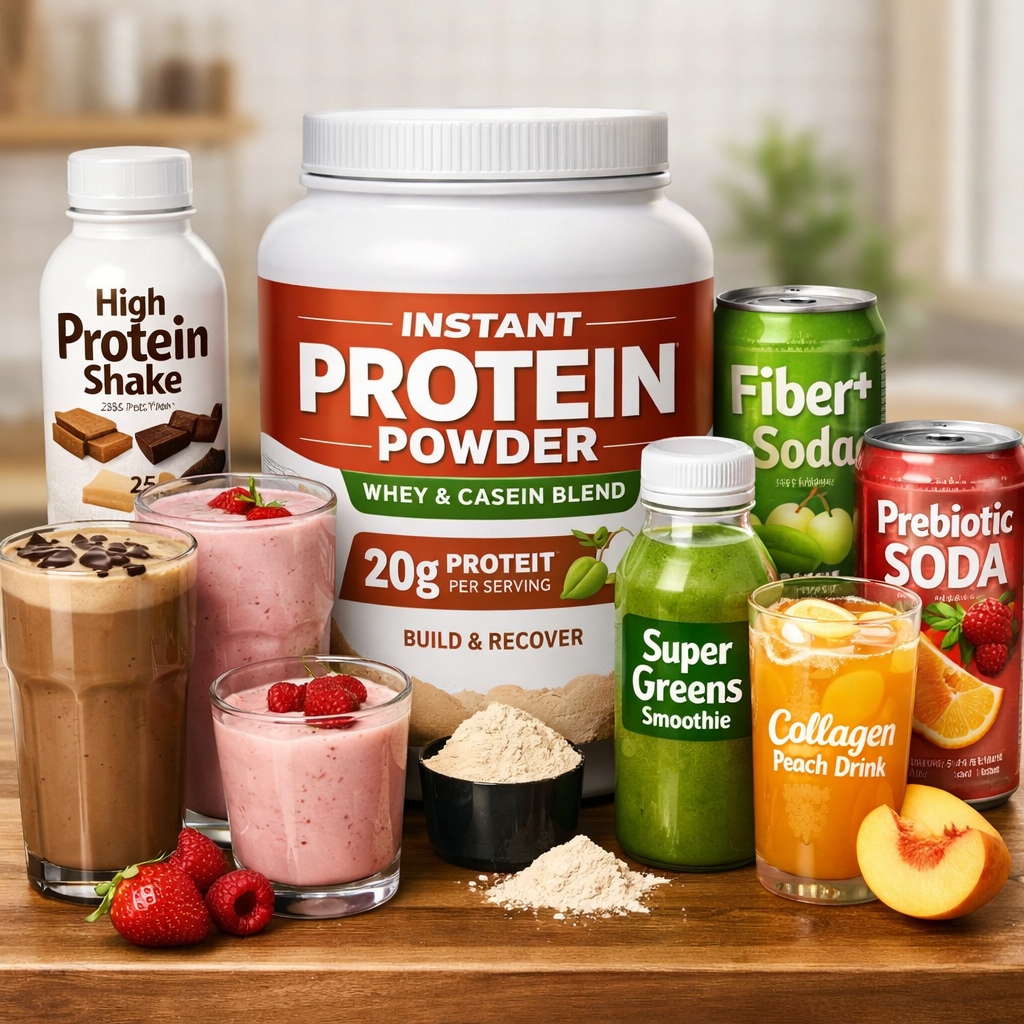
Acacia Gum in Prebiotic Soda: Fiber Fortification for Beverages
Acacia Gum and the Prebiotic Soda Boom: A Formulator's Guide to Fiber Fortification For beverage R&D teams and food processors, the fastest-moving...
4 min read

Acacia gum — also called gum arabic — is one of the most versatile hydrocolloids in a formulator's toolkit. It emulsifies flavor oils in beverages, stabilizes confectionery and dairy systems, builds texture in bakery and sauces, encapsulates flavors and actives, and delivers clean-label soluble fiber. For many US food and beverage manufacturers, there is simply no drop-in synthetic substitute for what acacia gum does.
That's exactly why the current supply picture is so uncomfortable. Sourcing reliable acacia gum has become one of the harder procurement challenges in the ingredient world — and the risk isn't just price. It's whether the acacia gum you can get actually matches the grade your formulation was built around.

The vulnerability starts with geography. More than 70% of the world's acacia gum originates from a single region — the "gum belt" of Sudan and neighboring Sahel countries. When one origin dominates a global ingredient, any disruption there ripples straight through to buyers everywhere.
And there has been disruption. Sudan's civil conflict, ongoing since 2023 and still affecting the trade into 2026, has tightened raw-material availability, scrambled established export routes, and made traceability far harder to guarantee from a region that has effectively become a war zone. The downstream effects for US buyers are familiar by now:
For a US manufacturer, the practical result is a familiar bad day: a stretched quote from your incumbent supplier, a price surprise, or the news that the specific acacia gum grade you rely on is suddenly on allocation or unavailable.
Here's what makes acacia gum different from a true commodity — you can't swap it blind.
Acacia gum performance varies with botanical source (Acacia senegal vs. Acacia seyal), geographic origin, and processing method. Those variables show up in the specs that actually matter to your formula: viscosity, arabinogalactan-protein content, emulsification capacity, solubility, moisture, color, and particle size. Two products both labeled "acacia gum" can behave very differently in a beverage emulsion or a confectionery coating.
So when a supply shock forces you to change suppliers, the danger isn't just finding any acacia gum — it's that a replacement which doesn't match your existing specification can trigger reformulation, re-validation, sensory drift, and new line trials. That's real cost and real time, on top of the supply problem you were already trying to solve.
This is where specification match becomes the deciding factor in choosing a new acacia gum partner.
GPI (Gum Products International) helps US manufacturers de-risk acacia gum sourcing through its PureAcacia line, backed by North American operations across our Ontario headquarters and Texas facility. Being close to your production shortens lead times and reduces the trans-Atlantic exposure that makes overseas-routed supply so unpredictable.
Two capabilities matter most for manufacturers under supply pressure:
1. Availability to supply at scale. GPI supplies acacia gum in large, bulk quantities with dependable lead times — so you can plan production instead of chasing allocation. Whether you're securing a second source for continuity or replacing an incumbent entirely, the goal is uninterrupted supply at the volumes your lines actually run.
2. Specification match. GPI will match the specification of your existing supplier's grade so you can transition without reformulating. Same functional performance, documented and validated — a drop-in that protects your formula, your label, and your timeline.
Switching acacia gum suppliers doesn't have to mean going back to the lab. The process is straightforward:
The result: a reliable, North American acacia gum source that behaves like the product you already qualified — without the reformulation tax.
A few examples from the PureAcacia range, spanning stabilization, emulsification, and texture:
Is there an acacia gum shortage in 2026? Supply remains tight and volatile rather than fully absent. Because most acacia gum comes from a single conflict-affected region, availability, pricing, and lead times have been unpredictable — which is why many US manufacturers are actively diversifying and securing second sources.
Can I switch acacia gum suppliers without reformulating? Yes — if the new supplier matches your existing specification. GPI's specification-match approach aligns a PureAcacia grade to your current supplier's spec so you can transition without triggering reformulation or revalidation.
What's the difference between Acacia senegal and Acacia seyal gum? Both are acacia gum, but they differ in functional properties. Senegal-type grades are often favored for low-viscosity emulsification, while seyal-type grades are frequently used for texture and body. GPI's line includes both stabilizer/emulsifier and Seyal texturizer options.
Can GPI supply acacia gum in bulk quantities? Yes. GPI supplies acacia gum at commercial volumes with North American operations built to serve US manufacturers reliably.
If tightening acacia gum supply is putting your production at risk, GPI can help you build continuity: dependable volume, North American operations, and a specification match to your current grade.
Send us your current acacia gum spec and request samples — we'll match it. Contact GPI to get started.

5 min read
Acacia Gum and the Prebiotic Soda Boom: A Formulator's Guide to Fiber Fortification For beverage R&D teams and food processors, the fastest-moving...
4 min read
One of the most common formulation questions we hear from R&D and procurement teams is also one of the most straightforward to resolve — once you...
3 min read
Xanthan gum is one of the most widely used hydrocolloids in the food industry — and one of the most underestimated. It shows up in everything from...